
Breast Augmentation in Pune with Breast Implants
Breast augmentation is surgery to increase the size or improve the shape of the breasts, most often with silicone implants placed behind the breast tissue or partly behind the chest muscle. It takes about one to two hours under general anaesthesia, and most women are back to work in a few days.

Dr. Sushrut explains breast augmentation




What each video covers
- Implant surgery start to finishThe breast implant procedure from start to finish.
- Choosing the right implantHow the right breast implant is chosen for your body.
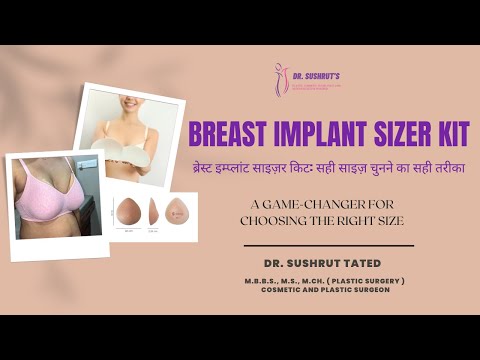
- The implant sizer kitHow a sizer kit helps you choose the size of breast implant.
- Are breast implants safe?Dr. Sushrut explains what is known about breast implants and cancer risk.
- Patient testimonialA patient talks about her breast implant surgery.
- Breast augmentation overviewDr. Sushrut gives a short overview of breast augmentation and the choices made at consultation.
Very minimal cut or small incision, closed with double-layered cosmetic sutures. A very thin, minimal scar is expected after surgery.
What is breast augmentation?
Breast augmentation (augmentation mammaplasty) increases breast volume and improves shape, usually with breast implants. Women choose it for different reasons:
- breasts that have always felt small for their frame
- loss of volume after pregnancy, breastfeeding or weight loss
- noticeable difference in size between the two breasts
- as part of reconstruction after breast surgery
A breast implant is a silicone shell filled with either silicone gel or saline (salt water). Implants come in different widths, projections, shapes (round or teardrop) and surface textures. Implants add volume; they do not lift breasts that have sagged a lot, which may need a breast lift as well.
Who may benefit, and how is suitability assessed?
You may be a suitable candidate if you are in good general health, your breasts have finished developing, you do not smoke or are willing to stop, and you understand that implants need lifelong follow-up and may need further surgery.
At consultation your surgeon will:
- Discuss your goals, including the look and size you would like and your lifestyle, work and sports.
- Take a health and family history, including any breast lumps, previous breast surgery, breast cancer in the family and plans for pregnancy or breastfeeding.
- Examine and measure your breasts: width of the breast base, skin stretch, nipple position, breast tissue thickness and chest wall shape. These measurements guide implant size more than cup size does.
- Arrange imaging if needed, such as a breast ultrasound or mammogram depending on your age and history.
- Use sizers or trial implants so you can see how different volumes look.
Augmentation is usually postponed during pregnancy and breastfeeding, while a breast lump is being investigated, or if there is significant sagging that would need a lift.
What are the options?
| Choice | Options | Things to weigh |
|---|---|---|
| Fill | Silicone gel or saline | Silicone feels more natural; saline leaks are obvious and may need a smaller incision |
| Shape | Round or anatomical (teardrop) | Round implants give upper fullness; anatomical implants can rotate |
| Surface | Smooth or textured | BIA-ALCL has been linked mainly to textured surfaces |
| Placement | In front of the muscle, behind the muscle, or dual-plane | Muscle cover helps when breast tissue is thin; affects recovery and movement |
| Incision | Under the breast fold, around the areola, or armpit | Fold incision gives the most control; areola incision may affect sensation |
| Alternative | Fat grafting | Smaller, less predictable increase; no implant |
| No surgery | Padded or shaping bras | No risk; no permanent change |
Our articles on implant placement and incisions and silicone vs saline implants explain these choices in more detail.
How is breast augmentation performed?
- Planning and markings with you standing, based on your measurements.
- General anaesthesia.
- Incision in the chosen location, most often the fold under the breast.
- Creating a pocket for the implant, either behind the breast tissue or partly behind the chest (pectoralis) muscle, with careful control of bleeding.
- Sizing and positioning: temporary sizers may be used to check shape and symmetry, with you sitting up on the table.
- Inserting the implant using a technique that keeps handling and contamination to a minimum.
- Closing in layers and applying dressings and a support bra.
Most women go home the same day or the next morning.
How should you prepare, and what should you ask?
- Stop smoking before and after surgery.
- Have any recommended breast imaging done first.
- Share all medicines and supplements; some increase bleeding.
- Arrange help at home for a few days and avoid lifting young children for the first weeks.
- Buy the support bra your surgeon recommends.
Questions to ask:
- Which implant fill, shape, surface and size do you recommend for me, and why?
- Where will the implant sit, and where will the scar be?
- Which implant brands do you use, and will I receive the implant details and card?
- How often should I have check-ups or scans afterwards?
- What happens if I need the implants changed or removed in future?
What is recovery like?
| Time after surgery | What to expect for most patients |
|---|---|
| Days 1-3 | Tightness and soreness, more if the implant is behind the muscle. Support bra on, gentle arm movement, short walks. |
| Week 1 | Most women are back to desk work in a few days. Avoid lifting, pushing or reaching overhead. |
| Weeks 2-4 | Swelling and bruising reduce. Light exercise such as walking increases. Implants may look high and firm at first. |
| Weeks 6-8 | Upper-body exercise and heavy lifting usually restart about six weeks after surgery, as advised. |
| Months 3-6 | Implants settle into a more natural position and the breasts soften. |
| 12 months | Scars have matured and the shape is stable. |
What are the risks of breast augmentation?
Breast implants are generally safe, but they carry specific risks, and the chance of needing another operation increases the longer you have them.
- Capsular contracture: the scar tissue capsule that forms around every implant tightens, making the breast firm, painful or misshapen. Surgeons describe it with the Baker grades I to IV. Severe cases need surgery.
- Rupture: silicone implants can rupture “silently” without symptoms. Regulators such as the FDA recommend periodic imaging with ultrasound or MRI for silicone implants, starting some years after surgery.
- Infection, usually early; sometimes the implant has to be removed.
- Haematoma or seroma (blood or fluid collection).
- Changes in nipple or breast sensation, usually temporary.
- Implant malposition, rippling or asymmetry, sometimes needing correction.
- Breast implant-associated anaplastic large cell lymphoma (BIA-ALCL): a rare lymphoma in the capsule, mainly with textured implants, usually appearing as late swelling.
- Systemic symptoms that some women attribute to their implants (often called breast implant illness), such as fatigue or joint pain. Research is ongoing; some women improve after removal.
- Scars, which are permanent and can thicken in some skin types.
Contact your surgeon promptly for fever, redness, one breast swelling much more than the other, or, at any time in the future, new swelling, a lump or pain around an implant.
What affects your results?
Your natural breast tissue, skin elasticity, chest wall shape and the implant chosen all affect how natural the result looks. An implant that is too wide or heavy for your tissues increases the risk of thinning, rippling and sagging over time. Pregnancy, weight change and ageing continue to change the breasts after augmentation.
What affects the cost of breast augmentation in Pune?
- Implant type and brand, which is a large part of the cost.
- Placement and technique, including whether a lift is needed.
- Anaesthesia, operating theatre and hospital stay.
- Pre-operative imaging and tests.
- Support bras, medicines and follow-up visits, and future imaging for silicone implants.
Cosmetic breast augmentation is usually not covered by insurance. Many women considering augmentation after pregnancy also look at a mommy makeover, which combines breast and abdominal surgery.
Questions about breast augmentation
How long do breast implants last?
Breast implants are not lifetime devices. There is no fixed expiry date, but the longer you have implants, the more likely you are to need another operation, for example for rupture, capsular contracture or a change in size. Regular check-ups are part of having implants.
Silicone or saline implants: which is better?
Silicone gel implants usually feel more natural and are the most commonly used today. Saline implants are filled with salt water, and a leak is obvious because the breast deflates. Both are safe for most women when chosen and placed carefully. See silicone vs saline breast implants.
Can I breastfeed with breast implants?
Many women can. Implants placed behind the breast tissue or muscle usually leave the milk ducts intact. An incision around the areola carries a slightly higher chance of affecting nipple sensation or milk flow, so tell your surgeon if breastfeeding is important to you.
Will implants affect mammograms?
Implants can hide some breast tissue on a mammogram. Tell the radiographer you have implants; special views are used to see the tissue around them. Implants do not prevent breast screening.
Where are the scars?
The most common incision is in the fold under the breast and is usually a few centimetres long. Alternatives are around the lower edge of the areola or in the armpit. Scars fade over 12 to 18 months but do not disappear.
What is BIA-ALCL?
Breast implant-associated anaplastic large cell lymphoma is a rare cancer of the immune system that can develop in the scar tissue around an implant, usually years later. It has been linked mainly to textured implants. The typical sign is new swelling of the breast from fluid around the implant, which should be checked.
Can implants be removed or changed later?
Yes. Implants can be exchanged for a different size or removed, with or without a breast lift. Some women choose removal later in life; the breast may look smaller or looser afterwards.
Is breast augmentation possible without implants?
A modest increase is possible with fat grafting, which moves your own fat from another area into the breasts. It gives a smaller, less predictable increase than implants and may need more than one session.
Consultation for breast augmentation
Consultations are in person at Dr Sushrut’s Plastic and Cosmetic Surgery Clinic, Sayar Clinic, Ayodhya Complex, in front of Canara Bank, Bibwewadi, Pune 411037. Hours: Monday to Saturday, 5-9 pm.
Appointments are booked by phone call or WhatsApp on +91 98904 34447 (WhatsApp). Bring any previous reports, prescriptions and a list of your current medicines.
References
- Breast Augmentation (StatPearls). NCBI Bookshelf, StatPearls Publishing.
- Risks and Complications of Breast Implants. U.S. Food and Drug Administration.
- Cosmetic surgery. NHS.
- Common cosmetic procedures. British Association of Plastic, Reconstructive and Aesthetic Surgeons (BAPRAS).


