
Acute Burn Care in Pune: First Aid, Dressings and Skin Grafts
Acute burn care starts with first aid: cool the burn under cool running water for 20 minutes, remove jewellery and loosely cover it with cling film. Shallow burns usually heal with dressings in about two weeks. Deep burns, or burns not healed by about three weeks, often need the dead skin removed and a skin graft.

Dr. Sushrut explains acute burns


What each video covers
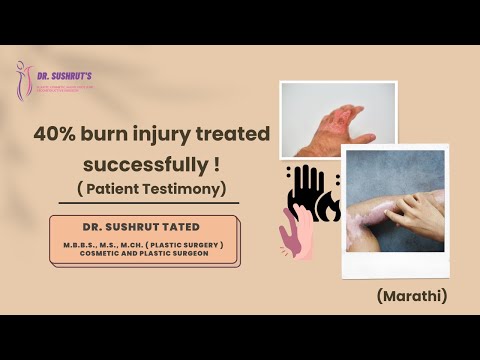
- 40% burn treatedA patient with a 40% burn injury treated successfully.
- Collagen dressing in burnsWhat collagen dressing is and why it matters in burn care.
What is an acute burn?
A burn is damage to the skin, and sometimes deeper tissues, from heat (flames, hot liquids, hot surfaces), electricity, chemicals, friction or radiation. Scalds from hot water, tea and cooking oil are common, especially in children, and kitchen fires are a frequent cause of burns at home.
Treatment depends on the size, depth and site of the burn, the person’s age and health, and whether other injuries, such as smoke inhalation, are present.
How deep is the burn?
| Depth | What it looks like | Usual healing |
|---|---|---|
| Superficial (epidermal) | Red, painful, no blisters, like sunburn | Within about a week, without scarring |
| Superficial partial thickness | Blisters, moist pink base, very painful | Usually within about 2 weeks |
| Deep partial thickness | Blotchy red or pale, less painful | Often more than 3 weeks; grafting often advised |
| Full thickness | White, brown, black or leathery; numb | Needs surgery and grafting, except very small areas |
Burns that take longer than about three weeks to heal have a higher risk of thick (hypertrophic) scars and contractures.
Who needs specialist care, and how is a burn assessed?
The doctor estimates the size of the burn as a percentage of the body surface, judges its depth, and checks for burns to the face, airway, hands, feet, joints and genitals. Large burns need intravenous fluids and care in a hospital or burns unit. Smaller burns can often be managed as outpatients with regular dressings.
What are the treatment options?
| Treatment | Suits | Points to consider |
|---|---|---|
| Cleaning and dressings | Superficial and small partial-thickness burns | Regular dressing changes and review |
| Blister care | Partial-thickness burns | Assessed and dressed by professionals |
| Early excision and skin grafting | Deep and full-thickness burns | Faster healing; less scarring than waiting |
| Escharotomy | Tight, deep burns around a limb or chest | Emergency release of burned skin to restore circulation or breathing |
| Splinting and physiotherapy | Burns over joints and hands | Prevents stiffness and contractures |
| Scar prevention | Any burn that takes longer to heal | Moisturising, silicone, massage, pressure garments |
Grafting techniques are explained under skin grafting surgery.
How is a deep burn treated surgically?
- Stabilisation: fluids, pain relief and infection prevention.
- Excision: dead burned skin is removed in theatre, usually within the first days to weeks.
- Coverage: the clean area is covered with a split-thickness skin graft; very large burns may need temporary covers first.
- Splinting: grafts over joints are splinted in a stretched position.
- Rehabilitation: physiotherapy and scar care begin as soon as the grafts are stable.
How should you prepare, and what should you ask?
- Bring details of how and when the burn happened.
- Tell the team about tetanus vaccination and medical conditions.
- Take pain relief before dressing changes if advised.
Questions to ask:
- How deep is the burn, and will it heal on its own?
- Will I need a skin graft?
- How often do the dressings need changing?
- What can I do to reduce scarring?
What is recovery like?
| Time | What to expect for most patients |
|---|---|
| Days 1-3 | Pain control; dressings; burn depth becomes clearer |
| Weeks 1-2 | Superficial burns heal; decision on surgery for deeper burns |
| Weeks 2-4 | Grafts take and donor sites heal; splints and exercises |
| Months 1-18 | Scar care; pressure garments if advised; follow-up for contractures |
What are the risks?
- Infection of the burn or graft.
- Graft loss, needing further grafting.
- Hypertrophic scars and contractures, especially over joints.
- Itching, dryness and colour change of healed skin.
- Emotional effects, including anxiety and changes in body image.
Seek prompt care for fever, increasing pain, a bad smell, pus or spreading redness around a burn.
What results can you expect?
Small, shallow burns usually heal well with good dressings. Deep burns heal faster and with less scarring when treated early with excision and grafting, followed by splinting and scar care. Long-term follow-up helps catch tightening scars early.
What affects the cost of acute burn care in Pune?
- Size and depth of the burn.
- Dressings: number and type of dressing changes.
- Surgery: excision, grafting and any repeat procedures.
- Hospital stay, physiotherapy and pressure garments.
Burn treatment is medical care and is often covered by health or accident insurance, subject to your policy.
Questions about acute burns
What should I put on a burn?
Only cool running water, for 20 minutes, then a loose layer of cling film or a clean, non-fluffy cover. Avoid ice, butter, oil, toothpaste, flour or other home remedies, which can deepen the injury or cause infection.
When does a burn need a skin graft?
When it is deep (full thickness or deep partial thickness) or has not healed by about two to three weeks. Grafting closes the wound sooner and lowers the risk of thick scarring and contractures.
How do I know how deep a burn is?
Red, painful skin is usually superficial. Blisters suggest partial-thickness damage. Pale, white, brown, black or leathery skin that feels numb usually means a deep burn. Depth can change over the first days, so burns are reassessed.
Should I pop a burn blister?
No. Leave blisters for a healthcare professional to assess and dress.
Are electrical burns serious even if the skin looks minor?
Yes. Electricity can damage deeper tissues and the heart rhythm while leaving small skin marks. All electrical burns need hospital assessment.
How are chemical burns treated?
Remove contaminated clothing, rinse the area with plenty of running water, and get emergency care. Do not try to neutralise the chemical with another substance.
Will a burn leave a scar?
Burns that heal within about two weeks usually leave little scarring. Deeper burns and slow-healing burns are more likely to scar. Early treatment and scar care help; see burn scar treatment.
Consultation for acute burns
Consultations are in person at Dr Sushrut’s Plastic and Cosmetic Surgery Clinic, Sayar Clinic, Ayodhya Complex, in front of Canara Bank, Bibwewadi, Pune 411037. Hours: Monday to Saturday, 5-9 pm.
Appointments are booked by phone call or WhatsApp on +91 98904 34447 (WhatsApp). Bring any previous reports, prescriptions and a list of your current medicines.
References
- Burns and scalds: treatment. NHS.
- Burns (fact sheet). World Health Organization.
- Skin Grafting (StatPearls). NCBI Bookshelf, StatPearls Publishing.
- The menace of post-burn contractures: a developing country's perspective. PubMed Central.


