
Scar Revision Surgery or Laser: Which Is Right for Your Scar?
By Dr. Sushrut Tated, plastic surgeon
Scar revision surgery or laser depends on the problem. Surgery changes a scar's width, shape, length or direction, or releases tightness. Laser improves texture, redness and some thickness, and suits acne scars and flat or slightly raised scars. Many scars benefit from both, with laser after surgery. Neither removes a scar completely. See scar revision surgery.

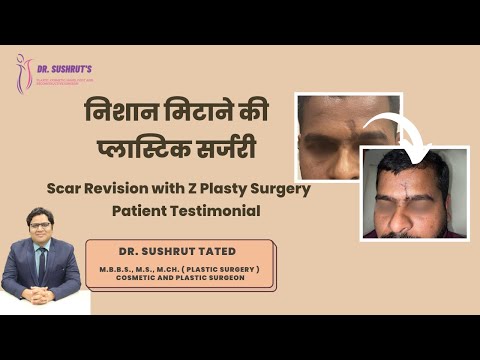
Dr. Sushrut explains scar revision surgery


Why does the type of scar matter?
Scars differ in width, height, colour, texture, direction and tightness. Surgery and laser work on different features, so the right choice starts with naming the problem. A long-standing review of surgical scar revision puts it simply: revision does not erase a scar but helps make it less noticeable.
Which treatment suits which scar?
| Scar problem | Surgery | Laser | Other options |
|---|---|---|---|
| Wide or stretched scar | Helps: cut out and close carefully | Little effect on width | Silicone after surgery |
| Scar in a poor direction | Helps: Z-plasty or W-plasty | Little effect | None |
| Tight scar across a joint | Helps: release with Z-plasty, graft or flap | Can soften | Physiotherapy, splints |
| Raised hypertrophic scar | Sometimes, with follow-up treatment | Helps texture and redness | Silicone, steroid injection |
| Keloid | Only with injections or radiotherapy afterwards | Adjunct | Steroid injections first |
| Sunken or tethered scar | Subcision or excision | Helps texture | Fat grafting, fillers |
| Acne scars | Excision of deep pits | Fractional laser helps many | Microneedling, subcision |
| Red or dark scar | Rarely needed | Vascular or pigment lasers | Time, sun protection |
What does scar revision surgery involve?
Surgery is usually done under local anaesthesia. The old scar is removed and the skin is closed in layers, or the scar is broken up with small flaps so it follows natural creases. Stitches come out in one to two weeks, and the new scar matures over a year or more. Read the details on scar revision surgery.
What does laser treatment involve?
Fractional lasers make tiny columns of controlled injury in the scar, prompting the skin to remodel. Other lasers target redness or pigment. Sessions are spaced weeks apart, numbing cream is used, and the skin is red and slightly swollen for a few days after each session. Most people need several sessions.
How are surgery and laser combined?
- Surgery first to fix width, direction or tightness.
- A few weeks later, silicone gel and massage begin.
- From about two to three months, laser sessions refine texture and colour.
- Steroid injections are added if the new scar starts thickening.
How long until you see results?
After surgery, the new scar is pink and firm for a few months and continues to improve for 12 to 18 months. After laser, smoother texture often shows gradually over the weeks after each session, with the full effect after the last session in a series. Photographs taken before treatment help judge the change fairly.
Does skin type change the choice?
Darker skin has a higher risk of colour change after laser, peels and some injections, and a higher tendency to raised scars. This does not rule out treatment but affects the settings, the number of sessions and preparation, such as sun protection and skin care before and after.
What can you do at home to help a scar?
- Use silicone gel or sheets daily once the wound has healed, if advised.
- Massage the scar gently for a few minutes several times a day.
- Protect it from the sun with clothing or sunscreen for at least a year.
- Avoid picking scabs or stretching a fresh scar.
- Keep follow-up visits so thickening can be treated early.
Myths about scar treatment
- “Laser removes scars.” It improves them, but does not erase them.
- “Surgery always makes scars worse.” Planned revision often gives a finer, better-placed scar.
- “Creams can remove old scars.” Silicone helps flatten and soften; other creams have limited evidence.
- “One session is enough.” Most scars need a series of treatments.
What should you ask before choosing?
- What type of scar is this, and what is bothering me most about it?
- Will surgery, laser or both help most?
- How many sessions should I expect, and over what time?
- What is the risk of colour change in my skin type?
If your scar is raised, read keloid vs hypertrophic scar first. For surgical options, recovery and cost factors, see scar revision surgery.
Frequently asked questions
Can laser remove a scar completely?
No. Laser can make a scar smoother, flatter and less red, but not invisible. Several sessions are usually needed.
Is surgery better for wide scars?
Usually, yes. A stretched or wide scar can be cut out and closed more carefully, giving a narrower line. Laser cannot narrow a wide scar.
What works for acne scars?
Acne scars are often treated with fractional laser, microneedling, subcision and sometimes fillers or fat grafting, depending on the scar type. Deep, sharply edged pits may be cut out individually.
How long should I wait before treating a scar?
Scars mature over 12 to 18 months. Surgery for appearance is usually planned after that. Laser and other treatments can sometimes start earlier to improve redness and thickness.
Can surgery and laser be combined?
Yes. A common plan is surgical revision to improve the shape or direction of a scar, followed by laser sessions to refine texture and colour.
Is laser safe for darker skin?
It can be, with appropriate settings and preparation, but darker skin has a higher risk of temporary or lasting colour change. Discuss this before treatment.
References
- Surgical Scar Revision: An Overview. Garg S, Dahiya N, Gupta S, Journal of Cutaneous and Aesthetic Surgery, 2014.
- Laser Revision of Scars (StatPearls). NCBI Bookshelf, StatPearls Publishing.
- Scar Revision (StatPearls). NCBI Bookshelf, StatPearls Publishing.
- Scars: treatment. NHS.


