
Hair Transplant Age: Is Your Early 20s Too Young for Surgery?
By Dr. Sushrut Tated, plastic surgeon
There is no fixed hair transplant age, but surgeons are cautious in the early twenties. Pattern hair loss usually keeps progressing, donor hair is limited, and a low hairline transplanted at 22 can look odd at 35. Many young men start with medicines first. A planned hair transplant can suit selected people once the pattern is clearer.

Dr. Sushrut explains hair transplant

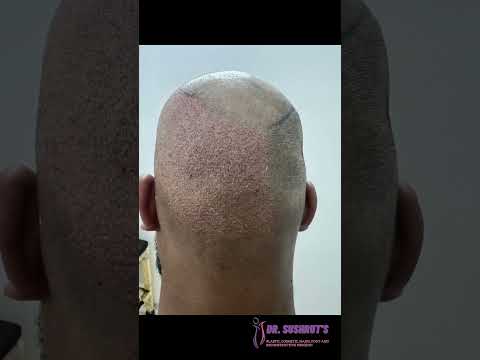


Why do so many young men ask about hair transplants?
Male pattern hair loss (androgenetic alopecia) can start any time after puberty. A receding hairline at the temples or thinning at the crown in your early twenties is common, and online it is often discussed in Norwood numbers, “hairline checks” and “balding at 22” videos. It is understandable to want to act fast.
The difficulty is that pattern hair loss is usually progressive. The hair you see today is not the hair you will have at 35 or 45, and a transplant has to make sense for both.
Why are surgeons cautious about a young hair transplant age?
- The pattern is not yet clear. In your early twenties it is hard to tell whether you will stop at a mild recession or go on to extensive loss.
- Donor hair is limited. Grafts come from the back and sides of the scalp, and that supply cannot be replaced. Using a large number early can leave too few for later.
- Hairline design. A low, straight teenage hairline may look good now but odd once hair behind it thins, leaving an island of transplanted hair.
- Ongoing loss around the grafts. Transplanted hair usually keeps growing, but your own hair around it may continue to thin.
The International Society of Hair Restoration Surgery notes that the main risk in a young patient is future hair loss, and recommends medical treatment as a first step for many.
Medicines first vs surgery now
| Medical treatment first | Hair transplant in early 20s | |
|---|---|---|
| Aim | Slow or stop further loss, regrow some hair | Move hair to thinning areas |
| Examples | Minoxidil; finasteride for men; PRP or GFC as support | FUE or FUT |
| Protects future hair | Yes, while used | No; existing hair may keep thinning |
| Uses donor hair | No | Yes, a limited supply |
| Reversible | Can stop | No |
| Usually suits | Most young men with early loss | Selected cases with stable loss and a conservative plan |
Finasteride and minoxidil are prescription decisions. Side effects, including sexual side effects with finasteride, should be discussed with a doctor before starting. Supportive treatments such as GFC and PRP have weaker evidence but are used alongside medicines by some patients.
Who in their 20s might be suitable?
A transplant may be reasonable in a younger man when:
- the hair loss has been stable for some time, ideally with medicine;
- the pattern and family history suggest limited progression;
- the donor area is dense;
- the goal is modest, such as framing the face, rather than restoring a teenage hairline;
- he understands that more treatment may be needed later.
What can go wrong if a transplant is done too early?
Problems with early transplants are usually about planning rather than the surgery itself:
- An isolated hairline. If the hairline is placed low and the hair behind it keeps thinning, a strip of transplanted hair can end up separated from the rest, which can look unnatural.
- Not enough donor hair later. Using many grafts at 22 can leave too few to treat the crown or mid-scalp at 35.
- Chasing loss. Repeated sessions to keep up with progressing loss can deplete the donor area and leave visible scarring.
- Shock loss. Some existing hair near the grafts may shed for a few months after surgery; it usually regrows, but this can be upsetting.
A conservative plan, medical treatment to protect existing hair, and a hairline designed for later decades reduce these risks.
A useful test is to ask how the plan would look if your hair loss went on to the more advanced end of the Norwood scale. If the answer is “still natural”, the plan is probably reasonable. If not, waiting or a smaller first session may be wiser.
Myths about hair transplants for young men
- “Get it done early before it is too late.” There is usually no rush, and waiting often leads to a better plan.
- “A transplant stops balding.” It moves hair; it does not stop the process in the rest of the scalp.
- “More grafts means better results.” Grafts are limited, and overusing them early can backfire.
- “Hair loss at 22 means you will be bald.” Progression varies a lot between people.
FUE or FUT for younger patients?
The clinic offers both FUE (follicles taken one by one) and FUT (a thin strip of scalp). FUE leaves tiny dot scars and suits short hair; FUT leaves a fine line hidden by longer hair and can yield many grafts at once. The choice depends on your donor area and hairstyle more than your age. Read FUE vs FUT for details.
When should you see a doctor about hair loss?
- Sudden or patchy hair loss, rather than a gradual pattern.
- Hair loss with an itchy, scaly, red or painful scalp.
- Shedding after illness, crash dieting or a new medicine.
- Hair loss that is affecting your mood or confidence.
Some of these, such as alopecia areata or scarring alopecia, are not suited to a transplant at an active stage, which is why diagnosis comes first.
How much should hair loss affect how you feel?
Hair loss can affect self-esteem, and it is fine to want to treat it. If worry about your hairline takes up a lot of your day or stops you going out, talk to someone you trust or a doctor. The Tele MANAS helpline on 14416 offers free support in India.
What should you ask at a consultation?
- What type of hair loss do I have, and how is it likely to progress?
- Should I try medicine first, and for how long?
- How many grafts would I need now, and how many would be left for later?
- Where would you place my hairline, and how will it look in 15 years?
For how the procedure works, the growth timeline and risks, see hair transplant. Medical options are covered under GFC treatment for hair loss.
Frequently asked questions
What is the minimum age for a hair transplant?
There is no single legal or medical cut-off, but many surgeons prefer to wait until the mid-twenties or later for pattern hair loss, unless the loss is stable and the plan is conservative. Each case is judged on the pattern, family history and donor supply.
Can I get a hair transplant at 21 if my hairline is receding?
Usually medical treatment and monitoring come first. At 21 it is hard to predict how far the loss will go, and transplanting a low hairline can leave an unnatural gap behind it later.
Do I need to take finasteride after a hair transplant?
Transplanted hair usually keeps growing, but your own hair around it may keep thinning. A doctor may suggest medicine such as minoxidil or, for men, finasteride to protect it, after discussing side effects.
What is the Norwood scale?
It is a chart that grades male pattern hair loss from a mild recession at the temples to extensive baldness over the crown. It helps describe hair loss but does not by itself predict how fast yours will progress.
Will a hair transplant look natural at my age?
It can, when the hairline is designed for how you will look in later decades rather than at your current age, and when the graft numbers match your donor supply.
Can stress or diet cause young men to lose hair?
Sudden shedding can follow illness, crash dieting, stress or low iron. This is different from pattern hair loss and often recovers, so a proper diagnosis comes before any surgery.
References
- Early hair loss: the young patient. International Society of Hair Restoration Surgery (ISHRS).
- Androgenetic Alopecia (StatPearls). NCBI Bookshelf, StatPearls Publishing.
- Hair loss male pattern (androgenetic alopecia). British Association of Dermatologists.
- Is Every Patient of Hair Loss a Candidate for Hair Transplant?. PubMed Central.


